


“Automakers remain committed to increasing fuel efficiency requirements, which yield everyday fuel savings for consumers while also reducing emissions -- because climate change is real and we have a continuing role in reducing greenhouse gases and improving fuel efficiency,” David Schwietert, executive vice president of federal government relations at the Alliance, wrote in the letter, which was made public Monday.
Road charging needed now: Productivity Commission | AFR
"Australia needs to bite the bullet on road-user charging in the next few years before the disruptive influence of electric vehicles and more fuel-efficient cars blows a hole in government revenue, according to Productivity Commission chairman Peter Harris.
Describing the inability of Australia to embrace road pricing as the "greatest failure of my time in infrastructure", Mr Harris said the failure of successive governments to sell the idea of paying for a quicker trip home or to work was a key reason for user charging always being left in the "too-hard" basket."
Executive Perspective: Determining What is "Green" | Thomson Reuters
“If you want to set rules and regulations, that’s why you need definitions, and that’s why green taxonomy is an important part of the European policy agenda.”
Dr. Paul Fisher, Senior Associate at the Cambridge Institute for Sustainability Leadership, discusses the determination of what “green” is . He unpacks the importance of identifying green definitions to better set rules and regulations, and create metrics to measure green investments and products at the 2018 Climate Bonds Initiative’s Annual Conference, in conversation with Sherah Beckley, Editor of Thomson Reuters Sustainability.
Sustainable finance: Making the financial sector a powerful actor in fighting climate change | European Commisssion

On Thursday 24th May, the EU Commission revealed its first legislative package on sustainable finance, comprising three major legislative proposals as a follow up to the Action Plan adopted in March:
- A unified EU classification system
- Investors' duties and disclosures
- Low carbon benchmarks
Read more: Press Release, Fact sheet and FAQ or proceed to the EU website for further information.
Some background
The EU and governments around the world committed to the objective of a more sustainable economy and society when they adopted the Paris Agreement on climate change and the UN 2030 Agenda for Sustainable Development. The EU is already making a difference thanks to the EU 2030 Energy and Climate framework, the Energy Union, the Circular Economy Action Plan, and the EU implementation of the 2030 Agenda for Sustainable Development. This is at the core of the Union’s Capital Markets Union project.
Current levels of investment are not sufficient to support an environmentally-sustainable economic system that fights climate change and resource depletion. More private capital flows need to be oriented towards sustainable investments to close the €180-billion gap of additional investments needed to meet the EU's 2030 targets of the Paris Agreement. The Commission's first step was the Action Plan on Financing Sustainable Growth of 8 March 2018. The Action Plan was informed by the final report in January 2018 of a High-Level Expert Group on sustainable finance established by the Commission in 2016. The Commission also conducted a public consultation on institutional investors' and asset managers' duties regarding sustainability.
On 22 March 2018, the Commission organised a high-level conference to discuss how to best put the Commission's strategy on sustainable finance into practice. The conference confirmed the support and commitment of EU leaders and key private players for the changes needed in the financial system and the economy.
AEMO looks to new tools, 'machine learning' to manage extreme weather | Financial Review
Digitalization: A new era in energy? | International Energy Agency

Over the coming decades, digital technologies are set to make energy systems around the world more connected, intelligent, efficient, reliable and sustainable.
Stunning advances in data, analytics and connectivity are enabling a range of new digital applications such as smart appliances, shared mobility, and 3D printing. Digitalized energy systems in the future may be able to identify who needs energy and deliver it at the right time, in the right place and at the lowest cost. But getting everything right will not be easy. Read more
TCFD US Scenario Analysis Conference
The Task Force on Climate-related Financial Disclosures (TCFD) held its first conference on scenario analysis and the recommendations of the TCFD in New York on May 1, 2018.

© 2018 Task Force on Climate-related Financial Disclosures. All rights reserved
The conference featured an overview of TCFD recommendations and examined the role of climate-related scenario analysis in disclosure. The event also discussed what resources and tools are available for companies to conduct scenario analysis and presented real-world examples of applying scenario analysis from the financial, energy, airline and automobile sectors. Read more
NEG or no NEG: it’s time for companies to look at climate change financial risks | MinterEllison

New legal analysis released to coincide with the Commonwealth Heads of Government Meeting (CHOGM) in London last month shows that Australian business needs to work on better understanding climate change through a financial risk lens.
If not, they may risk being left behind their global peers according to Sarah Barker, MinterEllison Special Counsel, Climate Change Risk.
“The key takeaways from the federal government’s response to the Senate Inquiry are that our law already accommodates action in this area, and that further regulatory guidance can be expected. This is only reinforced by the Commonwealth Climate and Law Initiative’s conclusion that Australian corporate governance laws demand a proactive approach to the governance and disclosure of climate-related financial risks. If this is news to any business or board, they would be well advised to accelerate their understanding of the issue before enforcement proceedings begin to flow.” Continue reading.
How utilities can keep the lights on | McKinsey & Company
"The new contracts are awarded after competitive reverse auctions, open to all kinds of competitors. This is likely to continue to drive down the price of winning bids and therefore returns. We have already seen the impact on new renewable capacity. If prices converge further and faster due to greater competition, the pace of technology cost improvement might not be fast enough to offset radically lower revenues. “
2°C or not 2°C? Unanswered Questions in ExxonMobil’s and Chevron’s Climate Risk Reports | Union of Concerned Scientists
"In response to a 2018 shareholder proposal, Chevron goes so far as to “… disagree with the premise… that future diversification of energy sources requires all energy producers to curtail production of fossil fuel resources and/or to diversify their portfolios proportionately. A decrease in overall fossil fuel emissions is not inconsistent with continued or increased fossil fuel production by the most efficient producers. "
What goes up must come down: It's time for a carbon drawdown budget | Climate Code Red
100% renewable electricity worldwide is a new cost-effective reality | The Beam

A global power system fully based on renewable energy is no longer a long-term vision, but a tangible reality.
Last year, Costa Rica has beaten its own record. The Central American country has run 300 days on electricity generated solely from renewable energy. Following the steps of Norway and Iceland, Costa Rica is about to showcase to the world how an emerging country can succeed in transitioning to a fossil-free electricity system.
Renewable energy is increasingly a success story in emerging and developing markets. Last year, they were leading in green energy investments. China will have added around 54 GW solar PV capacity in 2017 — three times more than any other country has ever done, which tops China’s total amount to 120 GW of solar PV installed capacity. India is catching up too, as its government announced to tender enough renewable energy projects to surpass 200 GW of new green capacity by 2022. According to financial analysts, by 2020 renewables will have become the cheapest form of power generation. Read More
HSBC to promise an end to its financing of coal power stations | Financial Times
The fiduciary responsibility of politicians and bureaucrats in the era of existential climate risks | Climate Code Red
The Pears Report - Risky Business? | Alan Pears, Renew Ecomony

THIS summer has exposed yet another aspect of the fragility of our traditional electricity
grid, with several failures in local distribution networks—the so-called ‘poles and wires’. As former ATA staffer Craig Memery has reminded us in a recent article (www.bit.ly/2HSHTao), the vast majority of power failures—97.2% on Craig’s figures—happen within local networks, with just 0.24% from insufficient generation.
Once again we face a choice between propping up traditional over-built
electricity supply infrastructure or driving transformation. The first involves inefficient capital investment in power lines and equipment capacity used for just a few hours a year; the second involves innovation with confusing options and other risks.
A NEG-ligible achievement | The Monthly
One of The Most Frightening Climate Change Predictions Seems to Be Already Happening | Science Alert
We have yet a lot to learn about the dynamics of the way the oceans absorb global warming.
Damage to Great Barrier Reef From Global Warming Is Irreversible, Scientists Say | NY Times
A huge heat wave killed 30 percent of the reef’s coral in 2016, and continuously high temperatures are preventing its recovery.
International Climate Risk Conference for Supervisors | Hosted by De Nederlandsche Bank - Klaas Knot
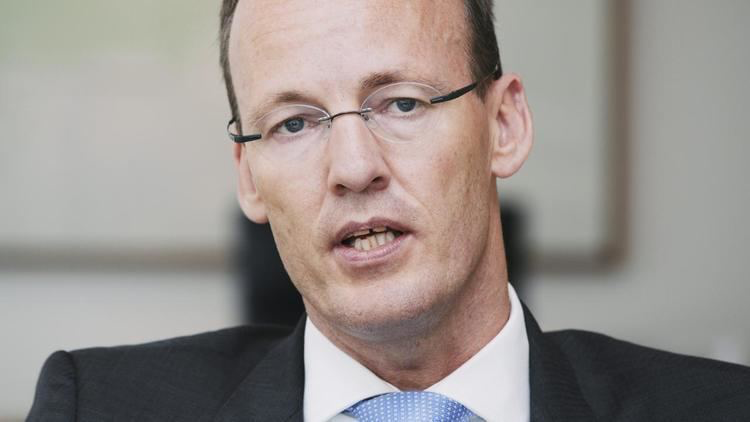
Welcome speech by Klaas Knot, President of the Dutch central bank De Nederlandsche Bank (DNB), at the first ever conference on climate risks and supervision, and also the first ever conference of the Central Banks and Supervisors Network for Greening the Financial System, Amsterdam, April 6th 2018.
Green Finance - a new frontier for the 21st century | Francois Villeroy de Galhau

Opening keynote by François Villeroy de Galhau, Governor of the Banque de France at the International Climate Risk Conference for Supervisors, Amsterdam, 6th April 2018. Slideshow below: