National Conference 2011
15th September 2011
Conference theme:
Where to from here?
The new rules for business
This year’s National Conference featured both stirring and startling presentations from a high-profile panel of speakers. Following the presentations was a panel discussion, with some robust discussion of current issues facing the business world and the ways in which businesses are tackling the step-change opportunities presented by the carbon reduction challenge.
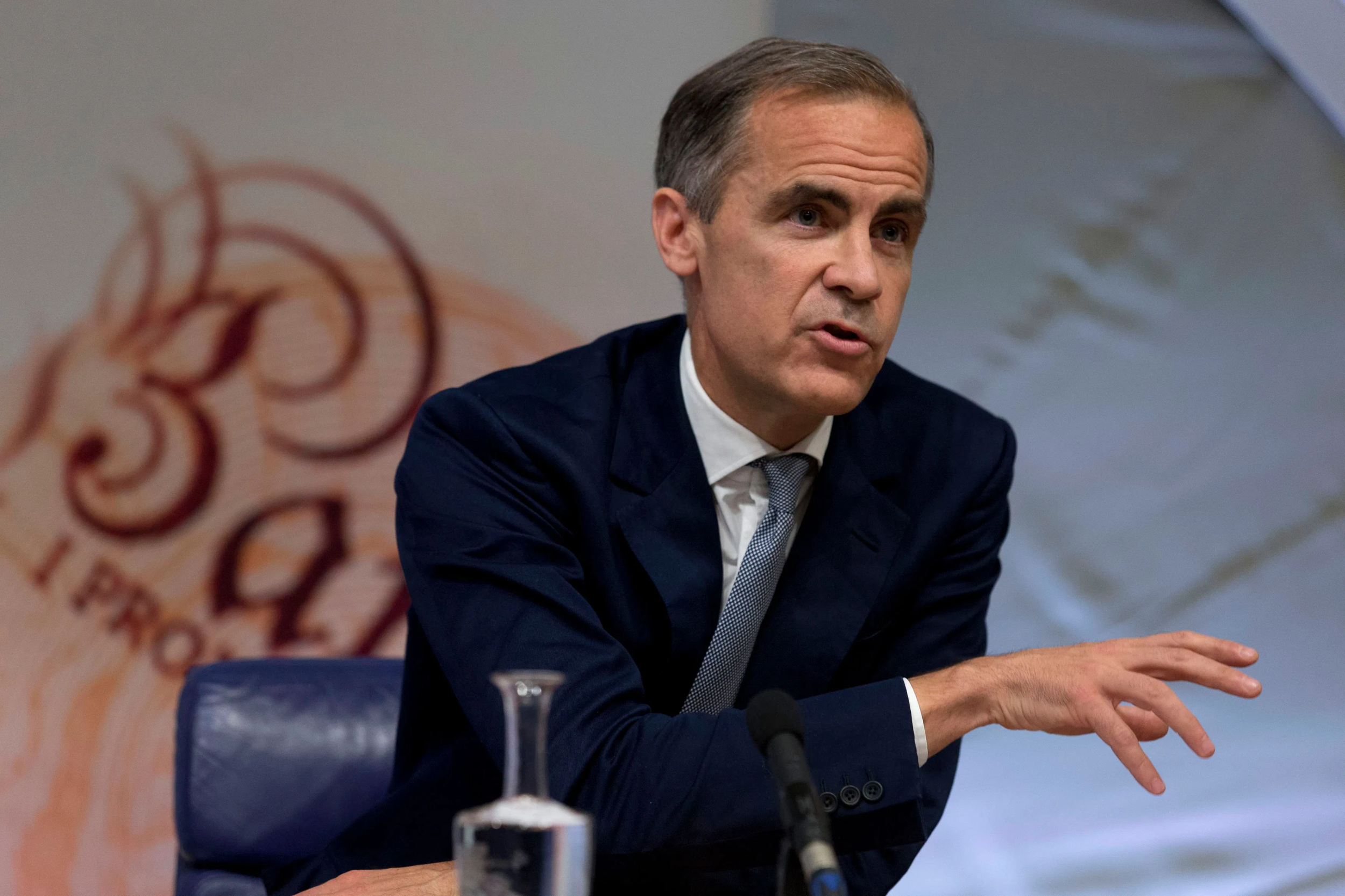
Keynote speaker: Mark Joiner Executive Director Finance, National Australia Bank
Mark Joiner pointed to biodiversity as the next environmental challenge on NAB’s agenda. NAB has been carbon neutral since September last year, having embarked first on a program that resulted in a 25% reduction in emissions over just three years – exceeding their own target of 20%. In the process, they have found it ‘amazing the energy you can unleash in an organisation’ by harnessing the enthusiasm and initiative of the staff. But, while championing the benefits that this program has delivered, Joiner says that biodiversity, rather than climate change, is the centre of the environmental challenge. ‘Biodiversity gives us an environment that is robust and adaptable and able to cope with change. The canary in the coalmine is species extinction,’ says Joiner.
All the major banks have endured criticism from environment groups for their investments in coal. Joiner argues that it’s ‘not the bank’s moral right to withhold credit from a robust business model because they’re not ideologically aligned with them.’ Rather, he sees the role of banks in closing the gap between regulation and values as influence through demonstrating leadership. Their voluntary effort to become carbon neutral embodies this approach. The bank has invested in reducing its carbon footprint and purchased carbon offsets to become carbon neutral. This effort has been more than repaid, not only in staff engagement, but also in their capabilities with regard to the burgeoning carbon market, and in their relationship with their customers – in agribusiness, fishing or mining – who need to wrestle with carbon measurement and reduction. Their next target is local initiatives for biodiversity. ‘The natural environment is worth three and a half times the value of the economy that we measure through GDP’, says Joiner. ‘We’ve been robbing from that bucket to put money in the bucket we measure.’ These may be startling words from the CFO of a bank, but they exemplify an attitude that is slowly taking hold in the business world
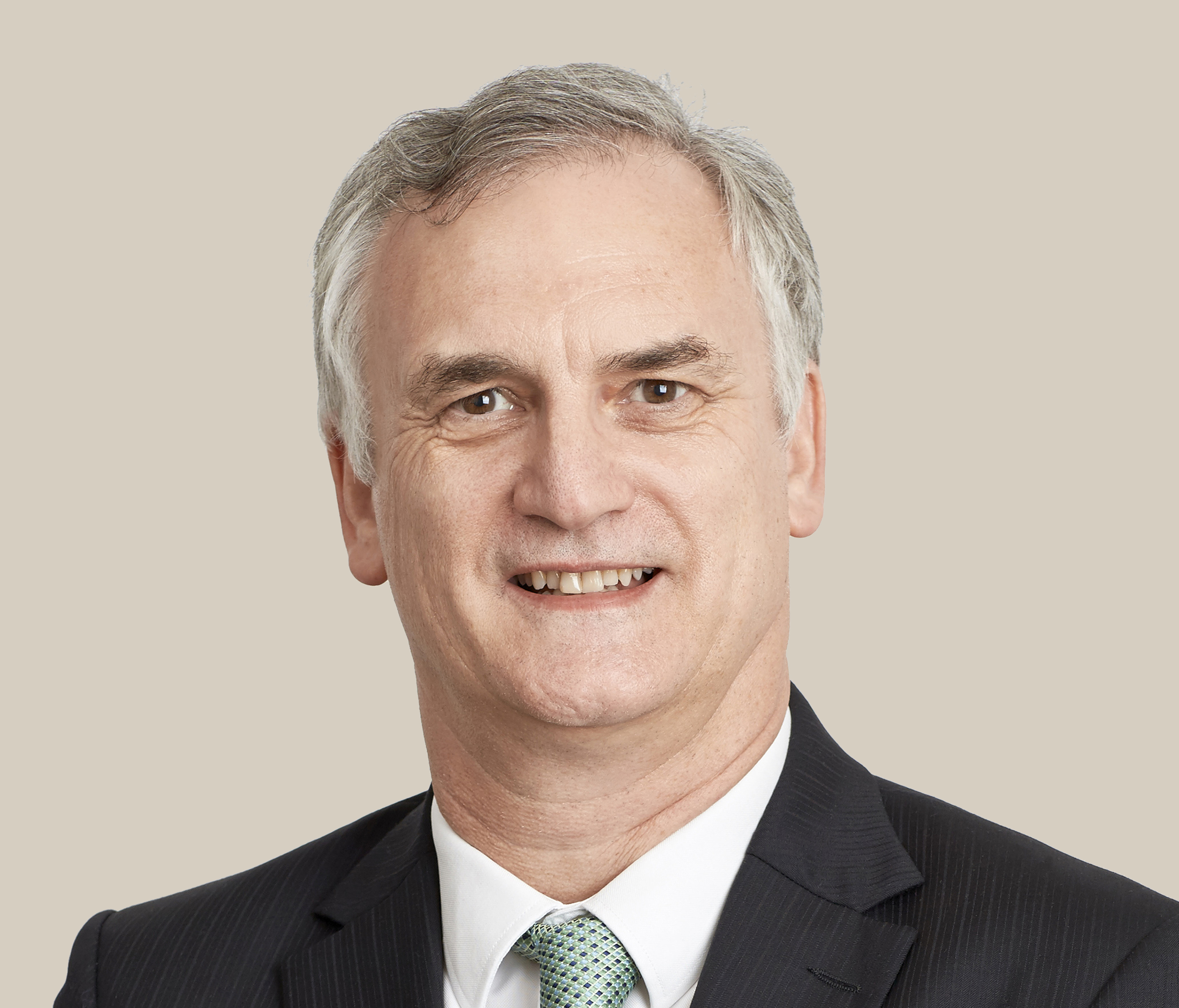
Tony Coleman Non-Executive Director, AMP and Low Carbon Australia
Tony outlined the activities of Low Carbon Australia (LCA), which provides financial solutions and advice on energy efficiency projects, and also provides official accreditation for carbon neutral claims. LCA have $100 million initial funding available to support carbon reduction initiatives. They have a particular focus on upgrading non-residential properties to maximize energy efficiency. This area has huge potential for cost negative energy savings, and LCA can help overcome the barriers of upfront costs and split incentives. View Presentation Slides
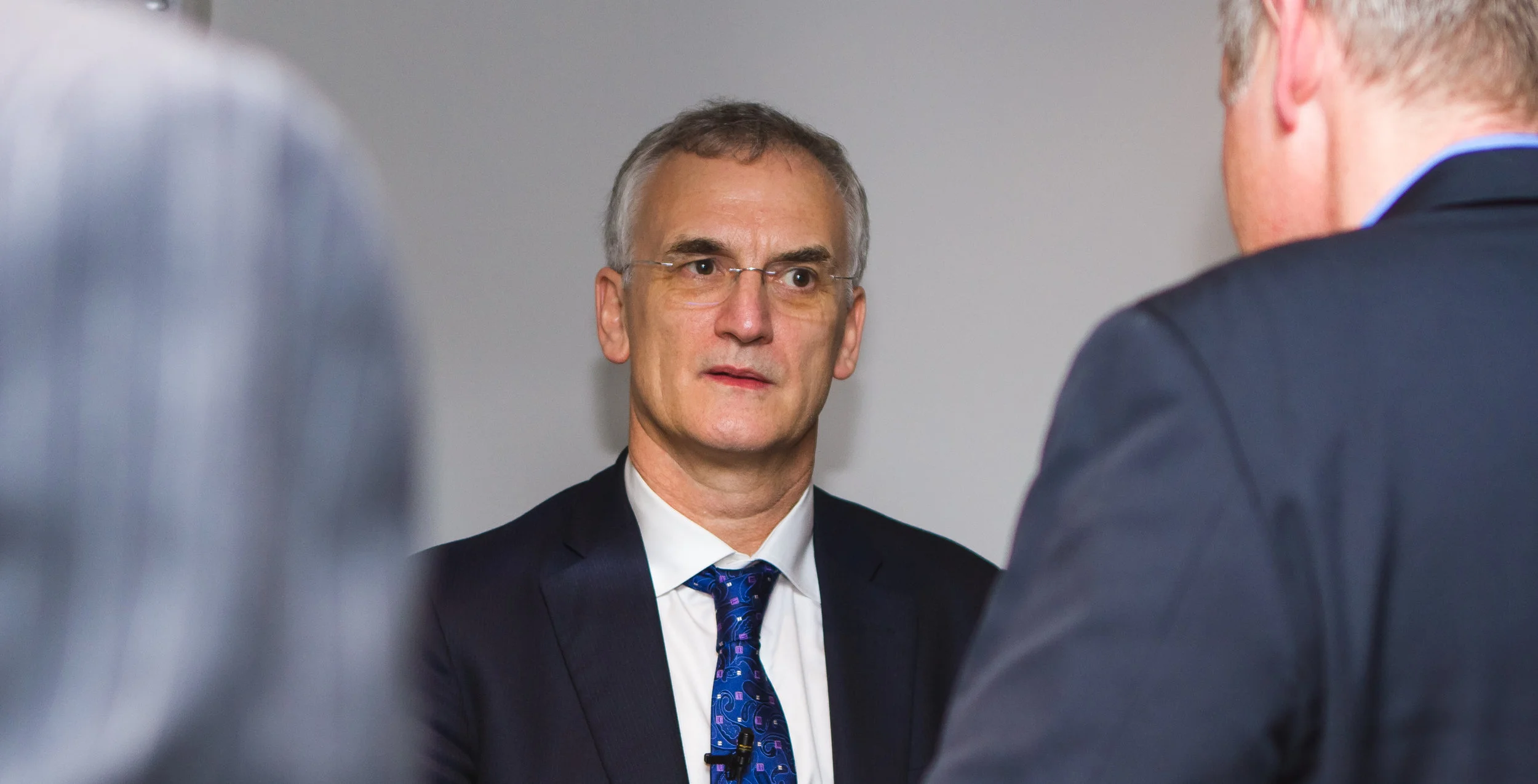
Ian Dunlop, former CEO of the AICD
Ian gave us a sobering reminder of the magnitude of the challenge that we face in tackling climate change and the extent to which the long-term effects – and the actions required to avoid those effects – are vastly understated in most public discussion. The much-debated carbon tax does not come close to answering the extent of the problem. What is needed is not a mere incremental approach, but a transformation of the economy. While we argue over 5% reduction by 2020, 50% is needed by 2020; and 100% by 2050. This is the biggest business risk ever faced by Directors, yet it is being almost entirely ignored. Speaking on the panel discussion later, Ian pointed out that the assumption that a carbon price will drive up prices may not prove correct. While prices will rise initially, once companies start innovating in the response to the stimulus, we may well see prices fall. View Presentation Slides
Jon Jutsen Director, Energetics
Jon began by highlighting how inefficient most energy production is – in Australia we typically get about 8-9% in productive energy output from the energy we put in. This means there is huge scope for more efficient ways of generating and using our energy. For example, a localized cogeneration plant may be 3-4 times more efficient than energy delivered from a remote coal-fired power plant. Jon sees the culture of ASX100 companies starting to come around, with more looking at cost abatement analyses. The carbon price is expected to be a game-changer that may bring payback periods down from 8 to 3 years, making more projects economically viable. Jon outlined the features of successful programs, which include: having a CEO with a vision for sustainability; linking that to the core business mission; stretch targets; staff engagement; clear accountabilities; effective measurement and reporting systems; an ROI hurdle set to encourage efficiency; competition; and partnerships with government and utilities (as seen, for example, in our Board Leadership award winner Qenos). View Presentation Slides
Climate Alliance National Conference
15 September 2011
Select Media & Company Releases:
The Age: On climate change, it's all-out war (pdf)
NAB CFO Mark Joiner - What banks can do to protect the environment (pdf)
Fuel cell company at the growth 'tipping point' (pdf)
Other:
Pre-conference flyer (PDF)
Venue:
Karstens Conference Centre
123 Queen Street, Melbourne

Climate Alliance Recognises Business Leadership
At the conference, Climate Alliance announced the Business Leadership Award winners for outstanding achievements in climate response within the business community. From a number of highly commendable submissions, three entries stood out in the categories of Board Leadership, Executive Leadership and Business Innovator. Qenos Pty Ltd, the largest polyethylene manufacturing company in Australia, is the winner of the Board Leadership award. The Qenos Board has supported resource efficiency priorities and has consistently demonstrated a willingness to invest in viable technologies with excellent commercial and environmental returns. Qenos have made significant investments, with substantial outcomes. Highlights include a $43.4m industrial cogeneration facility at its Altona factory. The plant will have a nominal capacity of 21MW and is expected to reduce greenhouse gas emissions by 100,000 tonnes per annum, the equivalent to taking 24,390 cars off the road. Qenos has also responded to water restrictions by reducing their water consumption by 35% over the last drought. Qenos has also partnered with City West Water to develop a large water purification facility in Altona. The $48m plant will produce Class A water and Qenos will draw 2 billion litres/year to use in its manufacturing operations, freeing up the equivalent amount of extra drinking water for CWW customers.
The 2011 Climate Alliance Executive Leader is Mr Ben Waters, Director of GE’s Ecomagination business. The selection panel felt that Ben Waters demonstrated active, visible and progressive leadership in the Australian business community. He has started some important initiatives and encouraged other firms to support the introduction of a carbon price. On behalf of GE, Ben signed a $20 million agreement with the CSIRO to invest in local R&D to accelerate the delivery of clean technology in Australia. In June 2011, Ben was also instrumental in signing a Memorandum of Understanding with electric vehicles infrastructure company Better Place to accelerate the delivery of electric vehicles locally. As part of this agreement, GE committed to purchase at least 1,000 electric vehicles in Australia by 2015. Ben provided a positive role model for other leaders in the business community. Most importantly, this leadership was demonstrated through action.
The 2011 Business Innovator is Ceramic Fuel Cells Limited, a Melbourne-based company that is a world leader in developing fuel cell technology. This innovative Melbourne based company, exports highly efficient fuel cells that generate electricity from natural gas and potentially renewable fuels. The selection panel commented that Ceramic Fuel Cells demonstrated determined innovation since its inception in 1992. It has invested over $250M in R&D towards the development of an innovative fuel cell technology that delivers power and heat to households in a very efficient manner. It has developed strong commercial relationships with some of the largest utility companies in Europe.